
Technology
Function and working principle
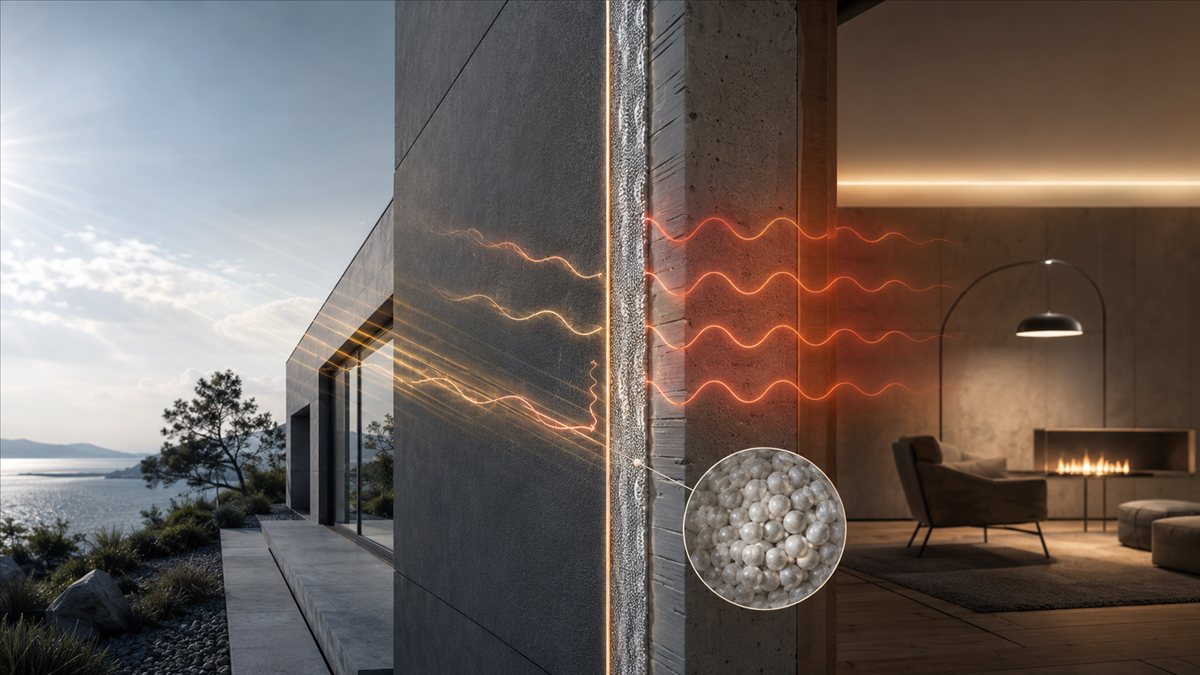
Nano facade insulation works differently from classic insulation materials. While conventional systems mainly rely on thick material layers, this technology specifically uses physical effects to influence and reduce heat transfer — at a layer thickness of only approx. 1 mm.
Three working principles
- Reflection of thermal radiation: Part of the incoming thermal radiation is reflected at the surface before it can penetrate the building substrate — the facade heats up less in summer.
- Reduction of heat conduction: The special material structure of the coating reduces heat conduction within the facade surface — heat losses in winter can be reduced.
- Effect on nanostructures: Within microscopically small nanostructures inside the coating, the movement of air molecules is restricted, which additionally influences heat transport.
Difference to classic facade insulation
Classic insulation methods such as external thermal insulation composite systems (ETICS) mainly work through material thickness and thick insulation boards. Nano facade insulation instead focuses on influencing heat transfer at the surface, uses physical effects instead of mass, and manages with a very low layer thickness of approx. 1 mm — without extensive structural alterations.
Effect in summer and winter
In summer, the reduced heating of the facade leads to a lower heat load in interior spaces. In winter, the reduction of heat losses supports a stable indoor climate — Nano facade insulation works all year round.
Suitable for which buildings?
Particularly interesting for existing buildings and renovations, older buildings and listed buildings, buildings where classic insulation is not possible, and facades with design requirements.