





Technology
Technology
Nano facade insulation is based on a specially developed coating technology that combines modern material science with physical principles of heat transfer — at just approx. 1 mm layer thickness instead of large material thicknesses.

Structure of the nano coating
The coating consists of a multi-layer system build-up:
- Primer (depending on the substrate)
- Functional layer
- Top coat
Inside both the functional layer and the top coat are microscopically small particles and cavities that act specifically on heat transfer. Both layers contain these ceramic hollow bodies; the functional layer carries the larger share of the insulating effect, while the top coat additionally provides UV and weather protection and can be tinted.
The Knudsen effect explained simply
An important physical effect within the coating is the so-called Knudsen effect: it occurs when gas molecules are inside extremely small cavities. The pores are so small that gas molecules can only move to a limited extent — collisions between molecules are reduced, while interactions with the pore walls dominate instead. Heat transport within these structures is thereby reduced. This is not classic convection, but a physical restriction of molecular movement.
The physics behind it is not new
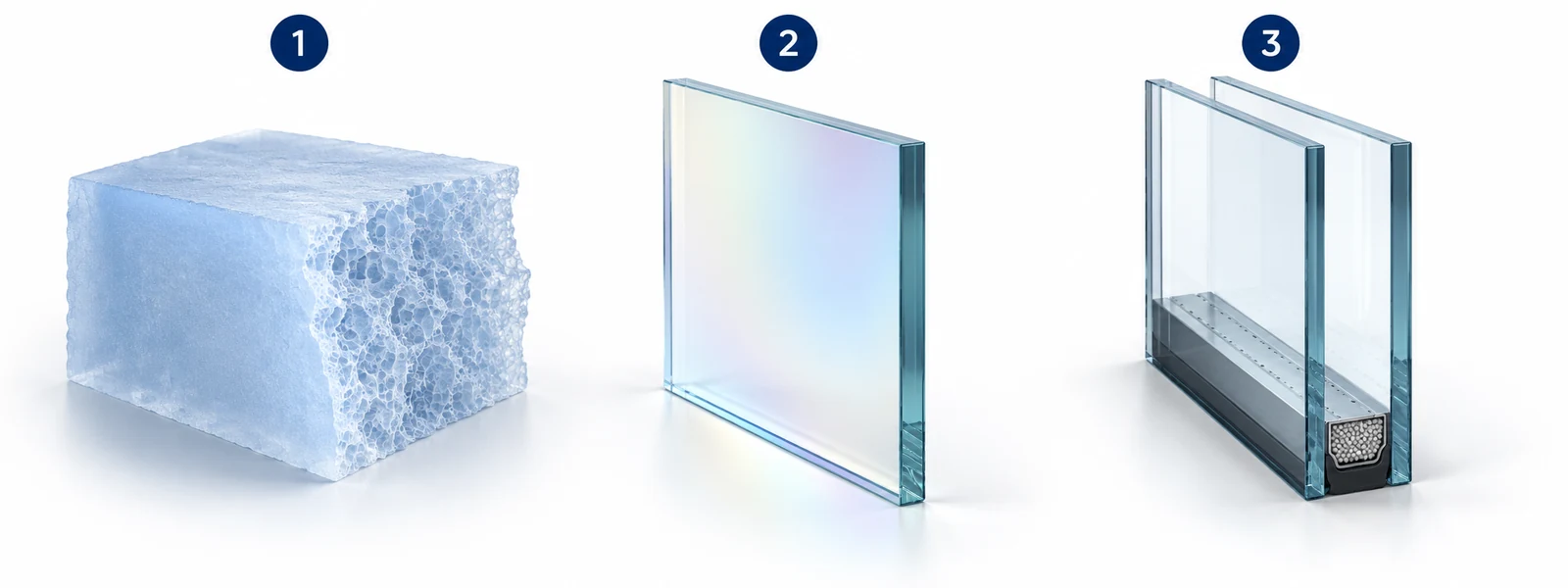
Nano facade insulation uses several of these effects within a very thin functional layer and top coat. What this achieves on a specific wall can be measured on the complete building element. These comparisons show that the underlying physical principles are established. They say nothing about the magnitude of the effect — that is what the measurements are for.
Material technology from high-performance industries
The materials used are based on technologies also used in industrial applications: special ceramic structures, microscopic hollow bodies and resistant binders ensure stability, weather resistance and durability.
Distinction from classic insulation
Classic systems such as ETICS work through material thickness and require several centimetres of insulation material. Nano facade insulation works through material structure, needs only approx. 1 mm layer thickness, and can be applied directly to existing surfaces.